HOA Satellite Dish and Antenna Rules: What the Federal OTARD Rule Actually Protects
The FCC's Over-the-Air Reception Devices Rule limits how much your HOA can restrict a small satellite dish or antenna — but not as much as many owners assume.
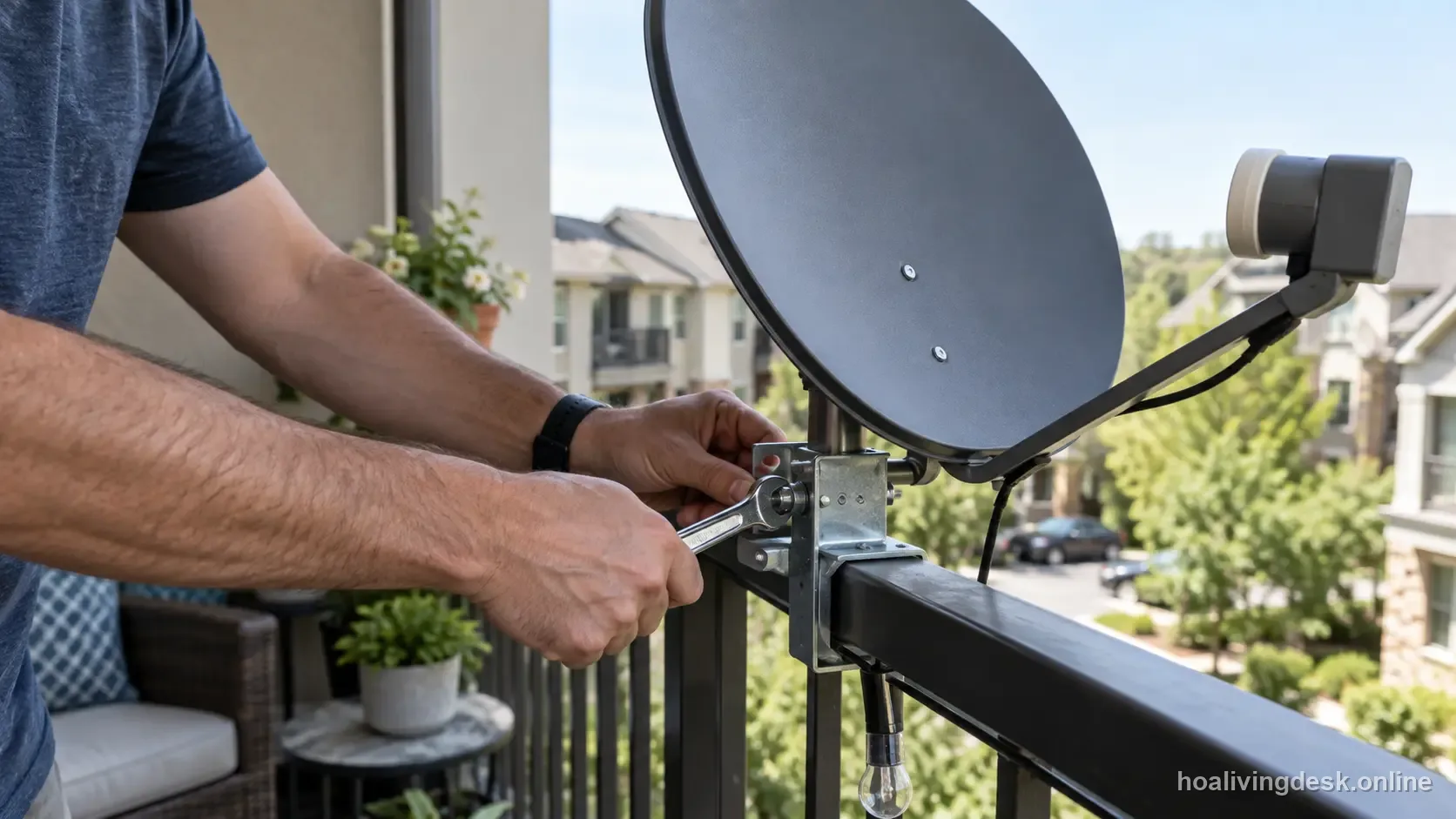
Many owners assume an HOA can simply ban satellite dishes or antennas outright as part of its general architectural control authority. Federal law says otherwise for a specific, narrow category of devices: the FCC's Over-the-Air Reception Devices Rule, codified at 47 C.F.R. § 1.4000, limits what an HOA can restrict when it comes to small antennas and satellite dishes used to receive video programming, in areas the resident controls exclusively.
What the rule actually covers
OTARD applies to antennas and satellite dishes one meter (39.37 inches) or less in diameter used to receive video programming — direct broadcast satellite service, multichannel multipoint distribution service, or standard television broadcast signals. It generally protects installation in an area within the resident's exclusive use or control, such as a balcony, patio, deck, or yard area that only that resident has the right to use — not a shared common area the whole community accesses.
What HOAs can still regulate, even for a covered device
OTARD is not absolute. Associations generally retain the ability to impose reasonable, non-discriminatory safety restrictions (for example, rules addressing how a dish is mounted to avoid a hazard), and OTARD's protection is generally understood not to reach a true common area outside the resident's exclusive control — a dish someone wants to mount on a shared roof or in a common courtyard is a different situation than one on their own private balcony. Cosmetic requirements like paint or camouflage color are sometimes allowed, but only if they don't impair reception quality or add unreasonable cost to comply.
| Situation | OTARD protection |
|---|---|
| Small dish (≤1m) on a balcony you exclusively control | Generally protected — HOA can't unreasonably restrict cost, delay, or reception |
| Small dish on a shared/common-area roof | Generally not protected the same way — common areas fall outside exclusive-control protection |
| Reasonable safety-related mounting rules | HOA can generally still impose these |
| Paint/camouflage requirement that doesn't impair reception or add unreasonable cost | Can sometimes still be required |
| A rule that effectively bans installation or makes it prohibitively expensive | Generally not allowed under OTARD |
If your HOA tries to block your satellite dish or antenna
- Confirm the device qualifies — one meter or less in diameter, receiving video programming, installed in an area you exclusively control.
- Ask the association in writing what specific rule they're citing, and compare it against the OTARD standard: does it unreasonably delay, prevent, or add cost, or preclude an acceptable-quality signal?
- If the HOA's objection is about safety or a genuinely shared common area rather than your exclusive-use space, that is a different legal question OTARD may not resolve in your favor — get specifics on their actual objection before assuming OTARD automatically wins.
- If you believe the HOA's rule violates OTARD, the FCC provides a complaint process, and disputes can also be resolved through state or local courts — check the FCC's current guidance for the specific complaint procedure available to you.
- Keep written records of your installation request, the HOA's response, and any specific restriction cited, since this documentation matters if the dispute needs to go further.
This is a federal rule, but the details still need verifying against the primary text
Because OTARD sits in the Code of Federal Regulations, the exact boundaries — particularly around what counts as a common area versus exclusive-use space, and what safety or historic-preservation exceptions apply — are worth checking against the actual regulatory text at 47 C.F.R. § 1.4000 rather than relying only on a general summary, especially if you're in an active dispute with your association over a specific installation.
What to do if your HOA's rule predates or conflicts with OTARD
Many HOA governing documents were written before satellite television and modern antenna technology were common, and older declarations sometimes contain blanket language banning any exterior antenna or dish without accounting for the federal protection that later overrode that kind of blanket rule. An outdated provision in your declaration doesn't change your rights under OTARD — federal law controls regardless of what an older document says, but it can create confusion or friction if the board isn't aware their own written rule is no longer fully enforceable as written.
If your association cites an old blanket-ban provision, it's reasonable to point out directly, in writing, that the specific device you're installing falls under OTARD's protection, and ask the board to update the governing document's language to reflect current federal law rather than continuing to enforce a provision that predates it. Many associations are willing to make this kind of technical correction once it's raised, since keeping an unenforceable rule on the books creates unnecessary risk for the association itself if a dispute ever escalates.
Keep a copy of your installation request and any written response from the association in your own records, along with a photo of the completed installation showing it meets the size and placement description you provided. This documentation costs nothing to keep and becomes valuable evidence if a dispute over the installation ever resurfaces months or years after the original conversation.
If the association continues to resist a properly qualifying installation after you have cited OTARD directly, consider putting your correspondence in writing rather than relying on verbal conversations at a board meeting, since a documented paper trail matters far more than a verbal exchange if the dispute ever needs to go further, whether that means an FCC complaint or a local legal proceeding.
Questions homeowners ask
Can my HOA ban satellite dishes entirely?
Generally not for small dishes (one meter or less) installed in an area you exclusively control, under the FCC's OTARD rule (47 C.F.R. § 1.4000). The HOA can't impose a rule that unreasonably delays, prevents, or increases the cost of installation, or that blocks acceptable reception.
Does OTARD protect a dish I want to install on a shared rooftop?
Generally not in the same way — OTARD's protection is aimed at areas within your exclusive use or control, and a true common area shared by the community is treated differently.
Can my HOA require a specific paint color for my satellite dish?
Sometimes, but only if the requirement doesn't impair reception quality or add unreasonable cost to comply — a cosmetic rule that effectively blocks good reception can violate OTARD even if it's framed as an aesthetic requirement.
What can I do if I think my HOA is violating OTARD?
Document your installation request and the HOA's specific objection in writing, then check the FCC's current complaint process — disputes can also be pursued through state or local courts.