The Right-to-Xeriscape Laws That Override Your HOA's Turf Rules
Which states legally block HOAs from requiring turf grass or banning drought-tolerant landscaping, what associations can still require, and how to bring a compliant xeriscape plan to your board.
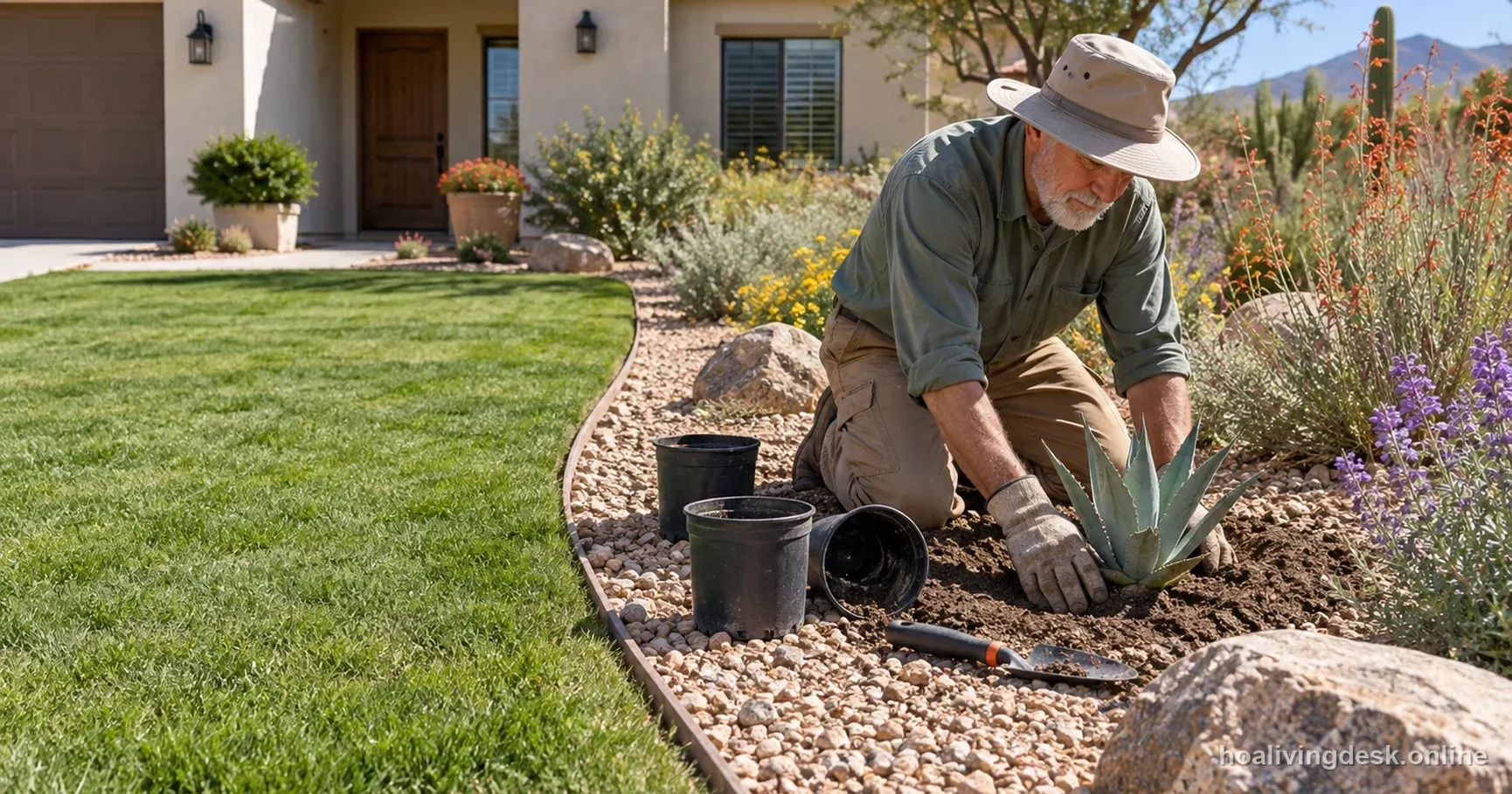
A rule requiring a green lawn made sense when it was written; in a growing number of states, it is now legally void wherever it conflicts with a homeowner's right to install drought-tolerant or native landscaping. If your HOA has denied or threatened to fine you for replacing turf with xeriscaping, the first question is not whether your design looks tidy enough — it's whether your state has a statute that already settled this.
States with a right-to-xeriscape statute
Texas, California, Colorado, Nevada, Utah, Maryland, Illinois, Maine, and Washington are among the states that limit or prohibit HOAs from banning native plants, drought-tolerant landscaping, or other low-water landscaping choices. The specifics of what is protected, and what the HOA can still require, vary meaningfully between them — these statutes are not a uniform template.
How the protection mechanism differs across states
The mechanics differ meaningfully between these states — some void conflicting covenants outright the way Texas does, others require the association to run a documented, reasonable design-review process rather than an outright ban, and some tie the protection specifically to compliance with a state or local water-efficiency program rather than protecting xeriscaping unconditionally. Because the exact statute section and scope shift and get amended periodically, look up your specific state's current landscaping or common-interest-community statute rather than relying on a general list of “protected states,” which can go stale as legislatures act.
Texas: broad protection, explicitly void covenants
Texas Property Code §202.007 protects xeriscaping, drought-resistant plants, rainwater harvesting (including barrels and collection systems), drip irrigation and efficient watering equipment, and composting. Critically, any covenant that violates this section is void regardless of when it was written — an association cannot point to a declaration from 1998 and argue it predates the statute; the statute overrides it retroactively on this specific point.
Colorado: SB 23-178 targets mandatory turf specifically
Colorado's SB 23-178, signed in 2023, prohibits HOAs from requiring turf grass that needs regular irrigation and requires associations to allow xeriscape as an alternative. As in Texas, the state statute overrides any conflicting HOA governing document.
California: Civil Code Section 4735
California Civil Code §4735 prohibits HOAs from preventing a homeowner from using drought-tolerant or low-water-use plants as a lawn replacement, and voids any governing-document provision requiring turf or restricting compliance with a local water-efficient landscape ordinance. This matters especially in California because many municipalities have their own water-efficient landscaping ordinances that push in the same direction — a homeowner following city rules cannot be blocked by a conflicting HOA turf requirement.
What HOAs can still require in every one of these states
- Reasonable maintenance and appearance standards — xeriscaping still has to look intentional and cared-for, not abandoned.
- An architectural review or design-approval process for the specific plant palette and layout, even though the HOA cannot deny the concept of xeriscaping itself.
- Setback, height, and sightline rules that apply neutrally to all landscaping types.
- Irrigation and drainage requirements that prevent runoff onto neighboring lots or common areas.
The pattern across every protective statute is the same: the law blocks HOAs from requiring turf or banning the concept of drought-tolerant landscaping, but it does not strip the HOA's general authority to require that any landscaping — turf or xeriscape — be maintained and look reasonably cared for.
States without protection
Not every state has moved on this. Oklahoma, for example, has no native-plant, xeriscape, or landscaping-protection law overriding HOA authority, which means an Oklahoma association's turf requirement in its declaration is likely fully enforceable as written. Before assuming your state has a protective statute, confirm it directly — the list of protective states is still a minority of all 50.
What to do if your board denies a compliant plan anyway
If you are in a protective state and the board denies or threatens to fine a plan that fits within the statute's protections, put the specific statute citation in writing to the board before escalating — many denials happen simply because the board or management company is unaware the law changed. If the board persists after being shown the statute, many of these laws include a private right of action or make the offending covenant provision explicitly void and unenforceable, which is a strong position in a dispute.
Water utility rebates can offset conversion cost
Many water utilities in drought-prone regions run turf-replacement rebate programs that pay homeowners a set amount per square foot of lawn converted to qualifying drought-tolerant landscaping. These programs are separate from the HOA dispute itself but are worth raising with your board as part of a proposal — a plan that comes with a utility rebate already lined up, and that cites the specific program's plant-list and design requirements, is easier for a board to approve because the utility has effectively already vetted the design standard.
A concrete checklist for the proposal
- Cite the specific statute section that applies in your state, not just the general concept of a xeriscape right.
- Include a plant list with mature heights and spread, so the board can evaluate sightlines and neighbor impact before installation rather than after.
- Include a maintenance plan — who weeds, who replaces dead plants, on what schedule — since 'will this look abandoned in two years' is the board's real underlying concern even when the stated objection is about turf.
- Attach photos of comparable, well-maintained xeriscape installations, ideally from within the same climate region.
- If a local water utility rebate applies, include the program name and its own design requirements as an attachment.
One more distinction worth checking in your own state: some xeriscape statutes protect only a full or partial lawn replacement with drought-tolerant plants, while a smaller number also separately protect specific water-saving hardware — drip irrigation lines, smart controllers, rain barrels — even in states where the plant-replacement protection is narrower or absent. If your dispute is specifically about equipment rather than plant choice, look for that separate hardware provision, since it can exist independently of the broader xeriscape protection.
Questions homeowners ask
Does a right-to-xeriscape law mean I can let my yard go completely wild?
No. Every protective statute preserves the HOA's ability to require reasonable maintenance and appearance standards. Xeriscaping still needs a maintained, intentional look — defined beds, edging, and plant care — not an unmaintained lot.
Can my HOA still require me to submit a plan for approval before I remove turf?
In most states with these statutes, yes — the HOA can still require architectural review of the specific design, even though it cannot deny the underlying request to replace turf with drought-tolerant landscaping.
What if my city has a water restriction that conflicts with my HOA's turf requirement?
In states like California, a conflicting HOA turf requirement is voided specifically where it blocks compliance with a local water-efficient landscape ordinance. Check both your state's xeriscape statute and your municipality's water rules, since either one might independently override the HOA's rule.