A Leak From Another Unit Damaged Yours: Who Pays?
A condo water-loss workflow that separates emergency mitigation, source repair, master policy, HO-6 claims, negligence, deductible allocation, documentation, and neighbor responsibility.
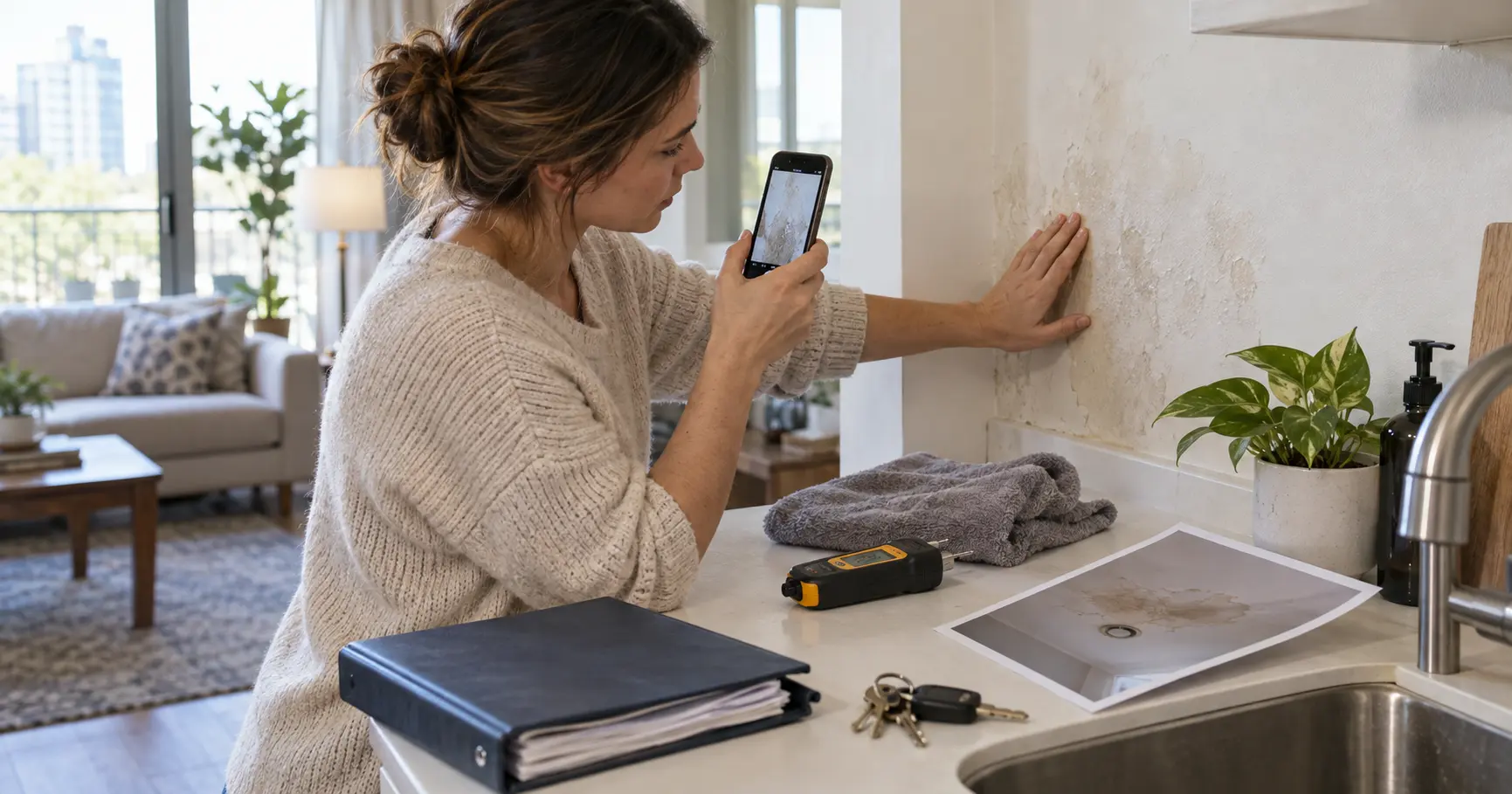
When water comes from another unit, 'who caused it?' and 'which insurer pays first?' are not the same question. Your first job is to stop damage and create a source record. Responsibility for the pipe or appliance, master-policy coverage, unit boundaries, deductible allocation, negligence, and your own HO-6 policy can each lead to different parts of the loss.
First hour: stop water, protect property, document source
- Contact building emergency/management if common plumbing or another unit may be involved.
- Move property out of active water where safe and take broad photos before demolition.
- Record the time, location, visible source, and names of anyone who inspected.
- Use qualified mitigation when needed; delaying dry-out can worsen damage.
- Do not make accusations about negligence before the source is known.
Separate source repair from damage repair
A failed dishwasher hose in Unit 4 may be the source, but the damaged ceiling in Unit 3 may be insured under a different policy depending on the declaration and master-policy form. Similarly, a common riser may be association responsibility even though the first visible water appears in one unit. Ask management to identify who owns and maintains the source component under the declaration.
Open parallel claims when appropriate
Notify your HO-6 carrier promptly when your property is damaged, even if you believe another owner or the association is responsible. The insurer can evaluate your coverage and may pursue subrogation if another party is legally responsible. The association should notify its master carrier when the loss potentially reaches covered common or building property. Waiting for neighbors to agree on fault can delay mitigation and coverage decisions.
| Question | Best document |
|---|---|
| Who maintains the failed component? | Declaration/unit-boundary and maintenance sections |
| What building property does master policy cover? | Master declarations/policy |
| What does your policy cover? | HO-6 declarations and policy |
| Who bears the deductible? | Declaration, state law, board policy, claim facts |
| Was someone negligent? | Inspection report, maintenance history, factual timeline |
Negligence is not the same as “water came from their unit”
A sudden hidden failure can occur without negligence. Repeated ignored leaks, known defective equipment, or careless conduct can create a different analysis. Do not demand payment from the neighbor merely because the source was inside their unit. Get the plumber or mitigation report and let insurers or counsel evaluate responsibility under the actual facts and law.
The master deductible can become the real dispute
Even when the master policy covers a building loss, a large deductible remains. State law and governing documents may allocate that deductible among the association, affected units, or an owner responsible for the loss. Your HO-6 loss-assessment or building-property coverage may respond in some situations. Ask both insurers for a written coverage position rather than relying on the manager's opinion.
Preserve a claim packet
- Photos and video before repair.
- Emergency and mitigation invoices.
- Plumber, leak-detection, or engineer report identifying source if possible.
- Association incident report and relevant emails.
- Master-policy claim number and adjuster contact if opened.
- Your HO-6 claim number and adjuster contact.
- Declaration sections on maintenance, insurance, and deductible allocation.
When the HOA is the bottleneck
If common property needs to be opened, dried, or repaired, the association may control access and contractors. Put urgent requests in writing and document worsening conditions. If delay threatens health, habitability, or major damage, involve your insurer and obtain local legal advice rather than waiting through ordinary board correspondence.
Water losses are solved by dividing the problem: stop the water, identify the source, map property responsibilities, open the right claims, and leave negligence for the evidence. Trying to answer 'who pays everything?' on day one usually produces the wrong answer.
Create one diagram of the water path
Sketch the source, the route water traveled, and every damaged area before walls are closed. Label which plumbing or building components appear to be inside a unit, limited common element, or common element under the declaration. Add photos from the plumber or restoration contractor. This drawing is not a legal conclusion about responsibility; it is a shared factual map that helps the HOA, both unit owners, and insurers talk about the same loss.
Ask each adjuster for coverage decisions in writing and note whether the decision addresses property coverage, liability, or both. One carrier may pay its insured’s damaged flooring without deciding that the upstairs owner was negligent. The association’s carrier may address a common pipe but not owner improvements. Keeping these coverage tracks separate prevents “their insurance paid, therefore they admitted fault” from becoming the basis of the dispute.
If demolition is needed before responsibility is clear, photograph each layer as it is opened and ask the contractor to identify the failed component in writing. A discarded supply line, valve, drain fitting, or section of common pipe can be the best evidence in the claim. Coordinate preservation with insurers when practical rather than throwing the part away during cleanup.
After repairs, keep moisture readings, drying logs, remediation invoices, and completion photos. A second leak months later is much easier to diagnose when you can show where the first loss ended and what materials were replaced or left in place.
If access to the suspected source unit is delayed, document every access request and the reason entry is needed. The repair timeline can affect mitigation costs, and a clear record separates unavoidable delay from a situation in which someone simply failed to respond to an active leak.
Questions homeowners ask
Is the upstairs neighbor automatically liable for my water damage?
No. Liability can depend on negligence, the source component, governing documents, and state law. Insurance coverage may pay losses even before legal responsibility is resolved.
Should I call my own HO-6 insurer if the leak came from another unit?
Usually it is prudent to notify your carrier promptly if you have damage. Your carrier can evaluate coverage and may pursue another responsible party later.
Who pays the condo master-policy deductible?
The answer can depend on the declaration, state law, insurance policy, and cause of loss. Ask for the association’s written allocation basis and check your HO-6 coverage.
What report matters most after a leak?
A qualified plumber, leak-detection, mitigation, or engineering report that identifies the source and affected components is often critical. Preserve photographs before repairs as well.